
Reviving Dinosaur Microbes
How Global warming is impacting the microbial community

In labs that research life and its profound mysteries, most of the work is done using biological samples. In the lab where I did my PhD, we worked on yeast. Yup, the same yeast that we use to bake breads and brew alcohols. It’s quite a useful little microorganism to study biological processes since most of those occur in almost exactly the same way as our human cells. But have you ever wondered how all these cells and biological samples are preserved? If all those cells die, years of research would be completely lost, wouldn’t it? The most popular way to preserve and store samples is by using cold temperatures. Labs have deep freezers that can provide temperatures from -20°C up to -80°C. It was always interesting to revive a 10-year-old preserved yeast or bacterial sample and find the cells alive and kicking even after practically being in ice for so many years!
If you think of the Arctic Circle and Antarctica, the temperature ranges from about -20°C in summer to -80°C in winter. Sound familiar? They quite closely resemble the deep freezers in the labs, don’t they? The resemblance is closer than you think! The Arctic and Antarctic ice have a plethora of millions of microorganisms that have basically been preserved across time! We have long since thought of glaciers as these pristine ice mountains made of fresh, pure water. Sorry to burst your bubble, folks, but the water is anything but “pure”.
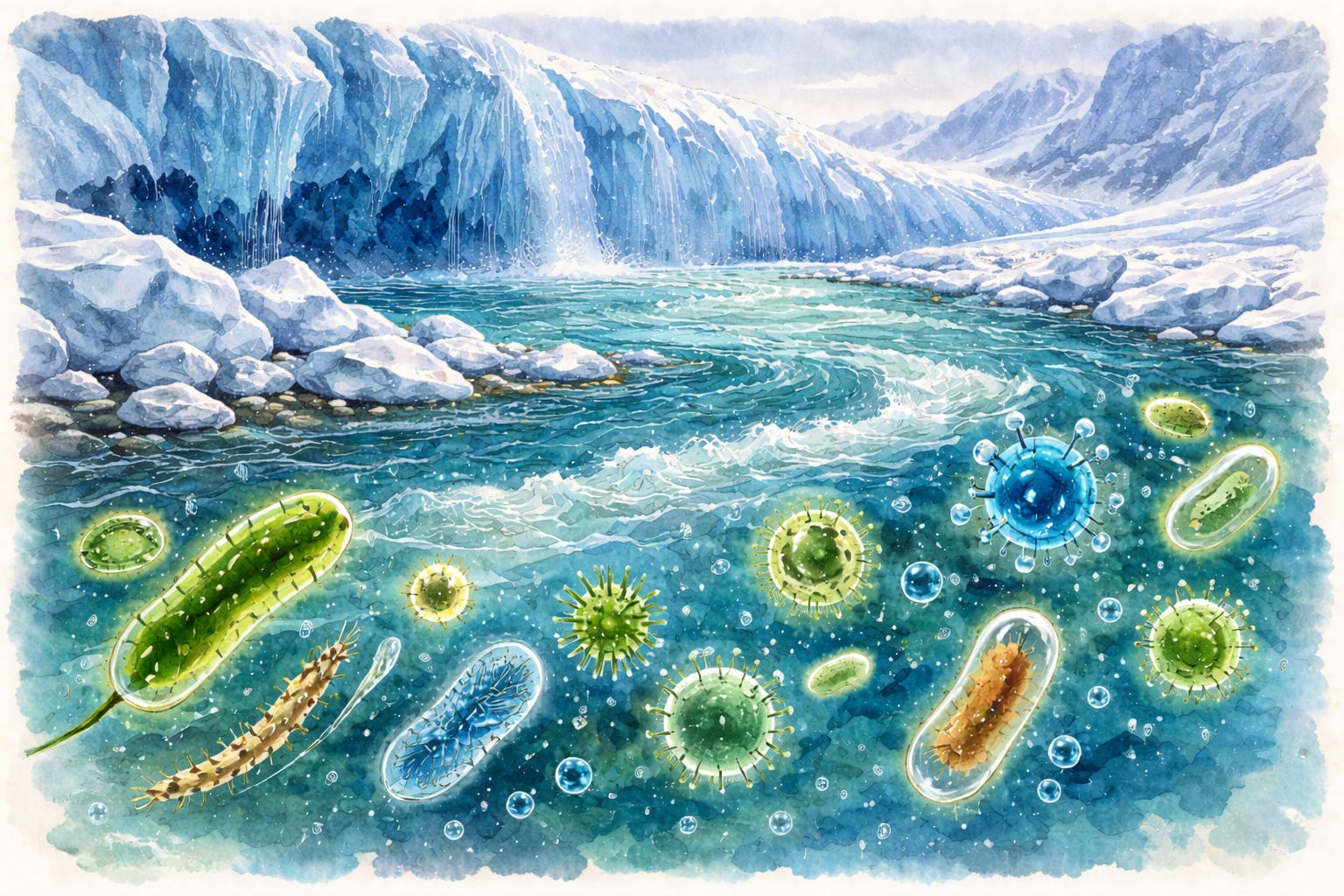
Remember the “Ice Age” movies? Remember how the glacial ice melting revives scary frozen animals that were supposed to be extinct? Well, thankfully, in real life, the T. rex isn’t getting freed from melting glaciers. But with global warming melting our ice caps, tonnes of ancient microorganisms are definitely being revived and dumped into the waterbodies that circulate over the entire Earth!
After experiencing the CoVID19 fiasco, the underrated microbial world gave us the realization that if the virus had been a tad bit deadlier, it could’ve spelled the end of the human race as we know it. Well, any one of these dinosaur-microbes that are being revived, that our immune systems have never met before, can potentially finish the job CoVID19 set out to do. We have made enough movies to know that humans and dinosaurs cannot mix without disaster unfolding.
Thankfully, till now, none of the microbes from glacier meltwater have been capable of causing human diseases. But scientists are worried about the amount of antibiotic resistance genes that are being released. Turns out, ancient microorganisms also have antibiotic resistance genes that may have modified over the years while residing in glaciers. As these genes are introduced to the current microbial community through melting glaciers, our microbial community can utilize these newly available antibiotic resistance genes and adapt in such a way that our medicines will no longer be effective. Either way, global warming and melting glaciers are sure to change not only the landscape of Earth but even life as we know it.